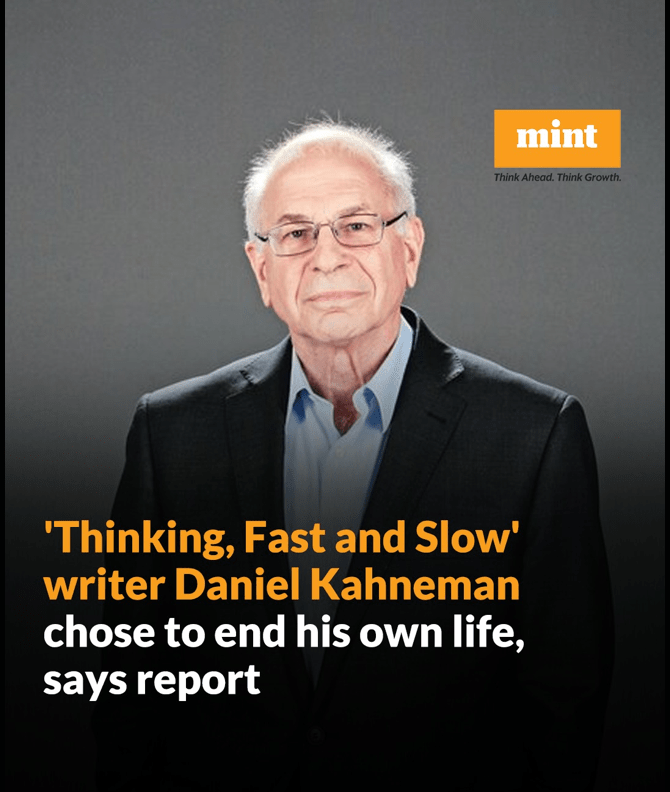
看到這則報導,我才知道Daniel Kahneman去年三月過世,而且是採取這樣的方式在瑞士離開!
我還在中研院時曾有大約半年的時間,為瞭解決道德經濟學給我的一些長期困惑,著迷於閱讀他跟幾位朋友關於經濟行為的認知心理學經驗研究。除了比較常被提及關於風險的認知,我更感興趣的是他們針對人們如何在經濟生活中感受與判斷「公平」(fairness)的研究發現。
我從這些閱讀中受益良多,甚至可以說是刺激我後來得以完成論文的關鍵突破,所以我對他一直有高度親切感,他拿到諾貝爾獎時也跟著興奮許久。
這封一年前的email,我反覆閱讀,勾起許多當年的閱讀回憶。不確定這個私人決定是否跟他的理論一致(需要嗎?);但人既非理性也非不理性,人只是如其所如活得人味。這點我在他最後的告白中感受深刻。
哲人已遠,願安息,感謝曾經的教導,給我的許多研究啟示。
我把文中的email 文字重新串連,閱讀少些中斷幹擾。Kahneman希望低調,翻譯在英文後面。
“I have believed since I was a teenager that the miseries and indignities of the last years of life are superfluous, and I am acting on that belief. Most people hate changing their minds,” he said, “but I like to change my mind. It means I’ve learned something…”
“I am not embarrassed by my choice, but I am also not interested in making it a public statement. The family will avoid details about the cause of death to the extent possible, because no one wants it to be the focus of the obits. Please avoid talking about it for a few days.”
“I discovered after making the decision that I am not afraid of not existing, and that I think of death as going to sleep and not waking up. The last period has truly not been hard, except for witnessing the pain I caused others. So if you were inclined to be sorry for me, don’t be.”… “Thank you for helping make my life a good one.”
「我從青少年時期起就一直相信,人生最後幾年的痛苦與屈辱是多餘的,而我正是依照這個信念行動。大多數人討厭改變自己的想法,但我喜歡改變想法,因為這意味著我學到了新的東西……」
「我不為自己的選擇感到難堪,但我也不想將它變成公開的聲明。我的家人會盡量避免透露死亡的細節,因為沒有人希望這成為訃聞的焦點。請避免在這幾天內談論這件事。」
「在做出這個決定之後,我發現自己並不害怕不存在,我將死亡視為入睡而不再醒來。這段最後的時光其實並不艱難,除了見證自己帶給他人的痛苦。因此,如果你原本想為我感到遺憾,請不必如此。」……
「謝謝你們讓我的人生變得美好。」
 First Step -----Jerry的日記部落格